

3D VR Reduces the Cognitive Load of Students Studying Anatomy
A study found that using 3D virtual reality in anatomy classes reduces students’ cognitive load when learning elaborate frameworks. Researchers said that three-dimensional content removes the need for learners to mentally reconstruct structures. This lowers the mental effort required. The results suggest a new approach to designing virtual reality for teaching.
Tod Clapp at Colorado State University led the research. Clapp is an associate professor in Biomedical Sciences and associate dean for academic and student affairs in Veterinary Medicine and Biomedical Sciences. The study examined biometric indicators of mental workload among students learning anatomy using virtual reality. Results showed lower mental effort when students viewed 3D structures instead of 2D images. The findings appeared in Medical Science Educator.
Before the study, the team noticed that anatomy students often struggled to read flat images of body parts. Turning these flat pictures into 3D shapes in their minds was hard work for the students.
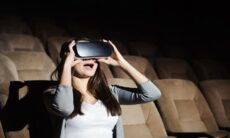
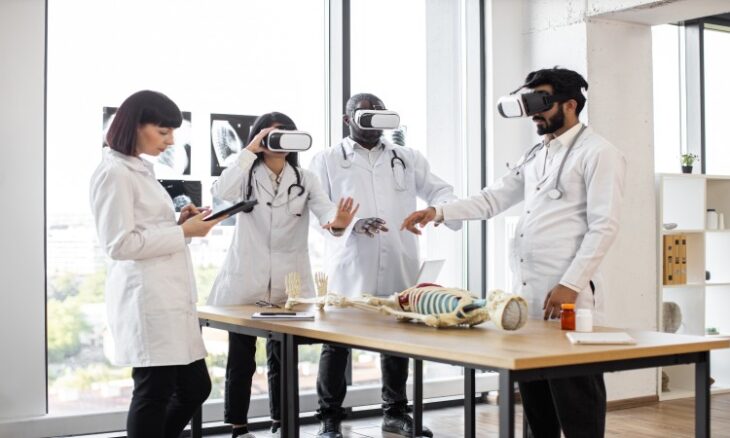
To look into this, the team used VR headsets with eye trackers to measure how much students’ pupils dilated or constricted, which indicates mental effort. Seventy anatomy students participated and gave short lessons on the larynx. Each student learned with both the 2D and 3D versions.
The collected data were analysed by a computer program to produce a mental effort score, so the team could see how much work the brain was doing. Students also gave feedback about how they felt during short interviews after their lessons.
The data showed that 3D virtual reality content consistently reduced cognitive load compared to 2D content. Seeing anatomical structures with accurate depth reduced the need for internal visualisation. This helped students process information more accurately.
The study showed that virtual reality tools can provide instant insights into student learning effort. Eye-tracking data allows researchers to observe changes in mental effort during lessons, providing a detailed view of how students engage with different content.
The results suggest that adding 3D content to VR lessons could help students learn anatomy better. With less mental effort needed, students may understand and remember tricky details more easily.
Additional research is planned to examine additional physiological indicators of mental workload and to apply similar methods to other training contexts, including assessments. The research team also reported that the project has contributed to the development of new virtual reality teaching materials created by graduate learners for future students.
This study supports the use of virtual reality in college, especially for classes that require students to understand space and shapes.